Next Period: Science with Mrs. B
Every year, right around mid-July, I pull out my laminated, color-tabbed, well-worn copy of The Classroom Management Book by Harry and Rosemary Wong. It’s not for decoration. I read it. Again. Cover to cover. Because no matter how many years I’ve taught, no matter how confident I feel in August, Wong and Wong always remind me that consistency is not optional, it’s essential.
I didn’t start my career “winging it.” I started it with procedures, clear expectations, and a laminated lab safety contract. And I credit that decision 100 percent to this book. In college, I read one quote that still echoes in my brain like the chant of a veteran teacher standing at bus duty:
“The number one problem in the classroom is not discipline. It is the lack of procedures and routines.” -Wong & Wong
Boom. There it was. And I’ve never forgotten it.
Why Consistency Matters (for Everyone Involved)
Let’s start with the basics. Consistency makes life easier for teachers AND students. When kids know what to expect, they feel safe. When we follow through with what we say we’re going to do, they learn to trust us. When you don’t change your expectations every Tuesday based on your caffeine levels, the room feels stable.
Consistency isn’t about rigidity. It’s about reliability. And believe me, middle schoolers are thirsty for reliability, even if they act like they live for chaos.
But Isn’t That Boring?
Nope. Predictability does not mean boring. We can still make slime, launch bottle rockets, and wear lab goggles with attitude. We just do it within a framework that everyone understands. Procedures allow for the fun because they take the guesswork out of what’s expected.
The most effective classrooms are those with a consistent structure and routine.” – Wong & Wong
How I Do It (Without Feeling Like a Drill Sergeant)
Let me be clear. I do not spend the first month of school teaching procedures like I’m running a bootcamp. I teach the most essential ones during the first days of school, and I revisit and reinforce them frequently during the first few weeks. I don’t do song and dance every time a student remembers to write in their notebook, but I do make time for quick praise, reteaching when necessary, and modeling the right way to do things.
This isn’t just about behavior. It’s about building habits that support learning.
A Few Procedures That Save My Sanity
You don’t need a hundred rules. You just need a few clear, high-impact procedures that you can reinforce over time. Here are a few that work wonders in my middle school STEAM classroom:
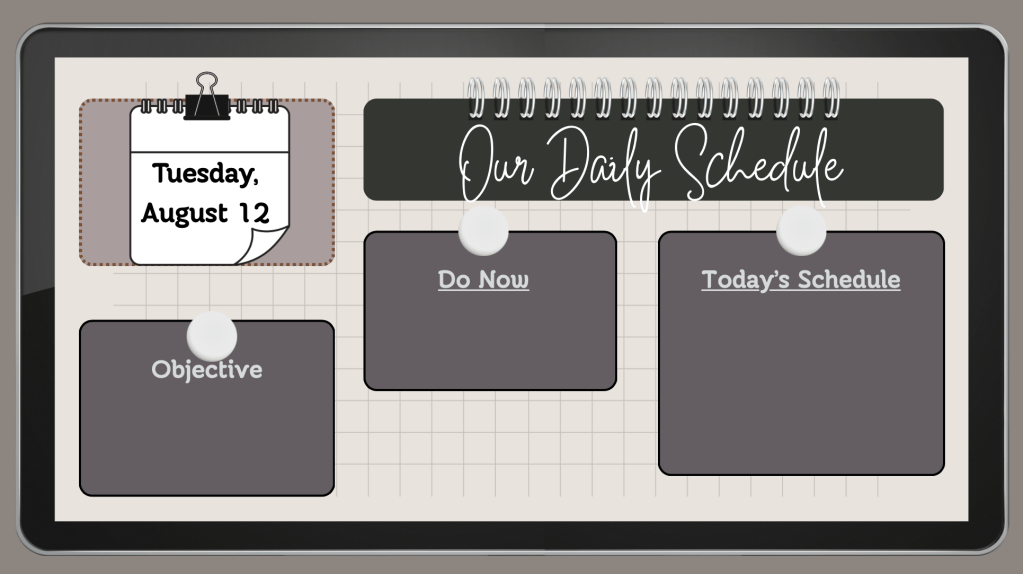
Agenda on the Board
Students enter, look at the board, and see:
1. Do Now
2. Learning Target
3. Today’s Activities
4. Homework
How to Reinforce It:
- Greet students at the door and point to the board if they’re off-task.
- Ask, “What’s step one today?” instead of repeating it ten times.
Bell Work = Non-Negotiable
Whether it’s a Do Now, Warm-Up, or quick quiz question, we start class the same way every day.
How to Reinforce It:
- Have a student pass out the notebooks as part of their daily job. (If students keep notebooks in the classroom).
- Keep the first 5 minutes sacred, no side chatter, no announcements, just work.
Notebook (Journal) Routine
Students know what goes in their notebook, how to set it up, and when I’ll grade it (usually at the end of each unit).
How to Reinforce It:
- Do the notebook with them at first. Model. Project it. Walk around and give stamps or stickers.
- Remind them: “If it’s not in your notebook, it didn’t happen.”
Entering the Room
They come in, grab their notebook, sit down, and get to work.
How to Reinforce It:
- Practice it (yes, even in middle school).
- Narrate the good: “I see three students already in their seats and started. Love it.”
Group Work = Group Responsibility
Group work isn’t “let the one kid do it all.” We assign roles and I give points for group cooperation.
How to Reinforce It:
- Use a timer. Keep it short and focused.
- Reward solid teamwork with stamps, stickers, praise, or early lab dismissal.
But What If I Need to Change Something?
Good news: Consistency doesn’t mean stuck. I change and improve procedures all the time, just not mid-lesson in a chaotic spiral. I reflect, tweak, and always introduce changes with clarity.
Middle schoolers will forgive almost anything as long as you’re honest. I’ve said, “Hey y’all, the way we’ve been turning in exit slips is not working. Let’s try something different starting tomorrow.” Boom. Done.
“Effective teachers manage their classrooms through procedures, not by yelling.” – Wong & Wong
Amen.
In Closing
Reading The Classroom Management Book every year isn’t some quirky tradition. It’s part of my growth as a teacher. It reminds me that consistency is a kindness. It’s what lets students breathe, focus, and trust that the classroom is a place where they can succeed.
We can have fun. We can get loud. We can launch things across the room on purpose in the name of science. But it all works because the structure is there.
So if your classroom feels like a circus, it might be time to reread Wong & Wong. Or, if you’re like me- just never stop.
Until next period,
Mrs. B
 Next Period: Science!
Leave a comment